
Bali’s reputation as a beach club and Instagram-swing destination sometimes obscures what actually makes the island remarkable: a deeply rooted Hindu culture found nowhere else in Muslim-majority Indonesia, ancient temples integrated into daily life rather than roped off as museum pieces, and landscapes that shift dramatically from coastline to volcanic highland within a short drive.
Ubud: The Cultural Heart
Ubud, in Bali’s central highlands, has long served as the island’s cultural and artistic center, and despite significant tourism growth over the past two decades, it retains a genuine connection to traditional Balinese arts, dance, and spirituality. The Ubud Palace hosts traditional Balinese dance performances several evenings a week, offering an accessible introduction to the intricate, symbolic gestures and elaborate costumes central to Balinese performing arts.
The Tegallalang Rice Terraces, just north of Ubud, showcase the subak irrigation system — a cooperative water management method dating back over a thousand years and recognized by UNESCO as a distinct cultural landscape — creating the dramatic, stepped green terraces that have become one of Bali’s most photographed sights. Visit early morning to avoid both the crowds and the midday heat, and consider walking the less-visited Campuhan Ridge, a scenic walking trail through Ubud’s outskirts that offers similarly striking landscapes with a fraction of the visitors.
Bali’s Sacred Temples
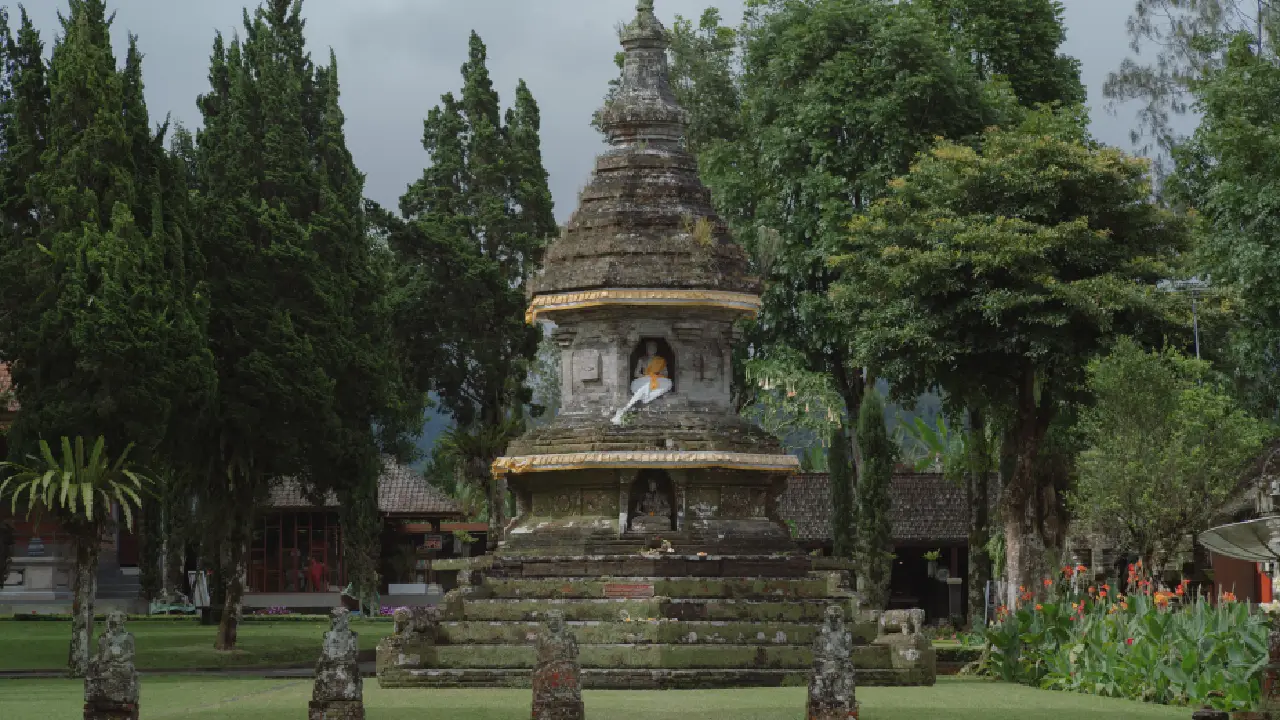
Bali is home to thousands of temples, but a handful stand out for both their spiritual significance and dramatic settings. Tanah Lot, perched on a rock formation just offshore, is one of Bali’s most photographed temples, particularly at sunset when its silhouette stands against the colored sky — though its popularity means visiting during golden hour requires navigating substantial crowds.
Besakih Temple, on the slopes of Mount Agung (Bali’s highest and most sacred volcano), is known as the “Mother Temple” and is the largest and most important temple complex on the island, comprising over 80 individual temples across a terraced hillside. Uluwatu Temple, dramatically situated on a cliff edge above the Indian Ocean in Bali’s southern peninsula, combines striking coastal scenery with an evening Kecak fire dance performance, one of the island’s most theatrical cultural experiences.
Volcanoes and Highlands
Mount Batur, an active volcano in central Bali, is one of the most popular sunrise trekking destinations in Southeast Asia — the roughly two-hour predawn hike to the summit rewards climbers with panoramic views across the island and, on clear days, neighboring Mount Agung and Lombok’s Mount Rinjani in the distance. Nearby, Lake Batur and the surrounding highland villages offer a noticeably cooler climate than the coast, a welcome break from Bali’s typical tropical heat and humidity.
Practical Notes
Bali’s roads are notoriously congested, particularly around the southern tourist hubs of Seminyak, Canggu, and Kuta, so factor in significantly more travel time between sites than distances alone would suggest — renting a scooter (with an international driving permit) is the most efficient way to get around for confident riders, while hiring a private driver for the day is a common and affordable alternative for those less comfortable navigating Bali’s traffic. The dry season, April through October, offers the most reliable weather for temple visits and volcano treks.