
Saudi Arabia opened to international tourism only in 2019, and Riyadh — long an insular capital rarely visited by outsiders — has rapidly become one of the most surprising new stops on the global travel map, blending ambitious modern architecture with historic sites tracing the origins of the Saudi state itself.
Day One: The Kingdom Centre and Modern Riyadh
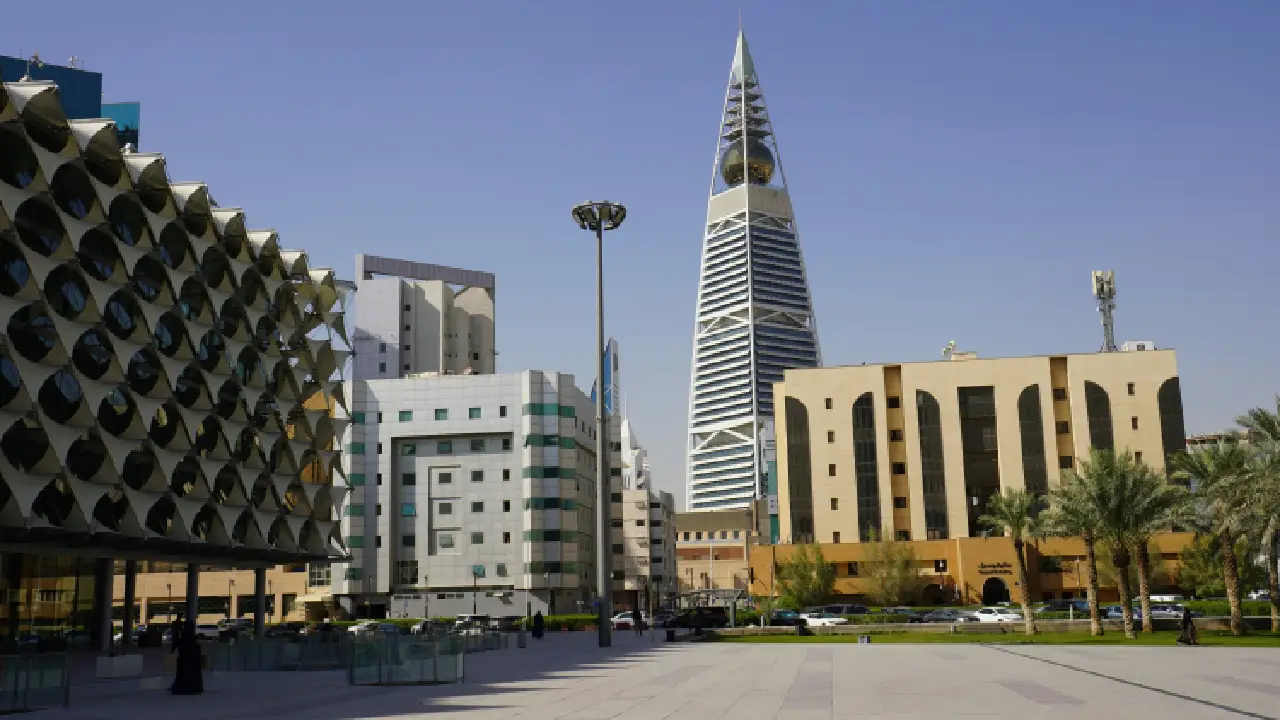
Start at the Kingdom Centre Tower, one of Riyadh’s most recognizable buildings thanks to its distinctive inverted-parabola shape with a connecting skybridge near the top. The Sky Bridge observation deck, suspended between the tower’s two halves roughly 300 meters up, offers panoramic views across the rapidly expanding capital — a useful orientation point before exploring further, and a striking illustration of just how much of Riyadh’s skyline has gone up within the past two decades.
Kingdom Centre’s mall level and surrounding Olaya district offer a look at contemporary Saudi retail and dining culture, a useful counterpoint to the more historic sites you’ll visit over the following days, and a good introduction to how rapidly social norms and public life have shifted in the country since the tourism-opening reforms began.
Day Two: Diriyah, the Birthplace of the Saudi State
Diriyah, on Riyadh’s northwestern outskirts, is where the first Saudi state was founded in 1727, and its restored mud-brick district, At-Turaif, is a UNESCO World Heritage Site offering the single most important historical site in the country. Walking through At-Turaif’s reconstructed palaces and mosques, built in the distinctive Najdi architectural style using traditional mud-brick construction techniques, provides essential context for understanding the origins of the modern Saudi kingdom, which traces its lineage directly to the alliance formed here between the Al Saud family and religious reformer Muhammad ibn Abd al-Wahhab.
Diriyah has also become a major development focus under Saudi Arabia’s Vision 2030 economic diversification plan, with new restaurants, galleries, and cultural venues opening around the historic core, making it both a historical pilgrimage site and an increasingly lively evening destination.
Day Three: National Museum and Edge of the World
The National Museum of Saudi Arabia, part of the King Abdulaziz Historical Center complex, traces the country’s history from pre-Islamic Arabia through the founding of the modern state, using well-curated exhibits that give useful context to much of what you’ll see elsewhere in the country. Its coverage of the Islamic period and the unification of Saudi Arabia under King Abdulaziz in 1932 is particularly thorough.
In the afternoon, venture outside the city to Jebel Fihrayn, more commonly known as the “Edge of the World” — a dramatic escarpment roughly 90 minutes from Riyadh where the Tuwaiq Mountains drop off in a sheer cliff face overlooking a vast desert plain below. The site requires a 4×4 vehicle and some light hiking to reach the best viewpoints, and sunset visits, when the cliffs and desert below take on deep orange and red hues, are particularly rewarding.
Practical Notes
Riyadh has expanded its metro system significantly in recent years, though taxis and ride-hailing apps remain the most practical way for visitors to get around, particularly for sites like Diriyah and the Edge of the World that sit outside the immediate city center. Saudi Arabia now offers e-visas for many nationalities, a significant change from the country’s historically restrictive entry policies. Modest dress is expected in public, though the dress code has relaxed considerably in recent years — an abaya is no longer legally required for foreign women, though many choose to dress conservatively out of respect for local norms.