
When Qatar hosted the 2022 FIFA World Cup, it became the first Middle Eastern nation to do so, and the country invested heavily in stadium architecture designed to leave a lasting legacy well beyond the tournament itself. Several of these venues remain open to visitors, offering an unusual lens into Qatar’s ambitions and design philosophy.
Lusail Stadium: The Final’s Grand Stage
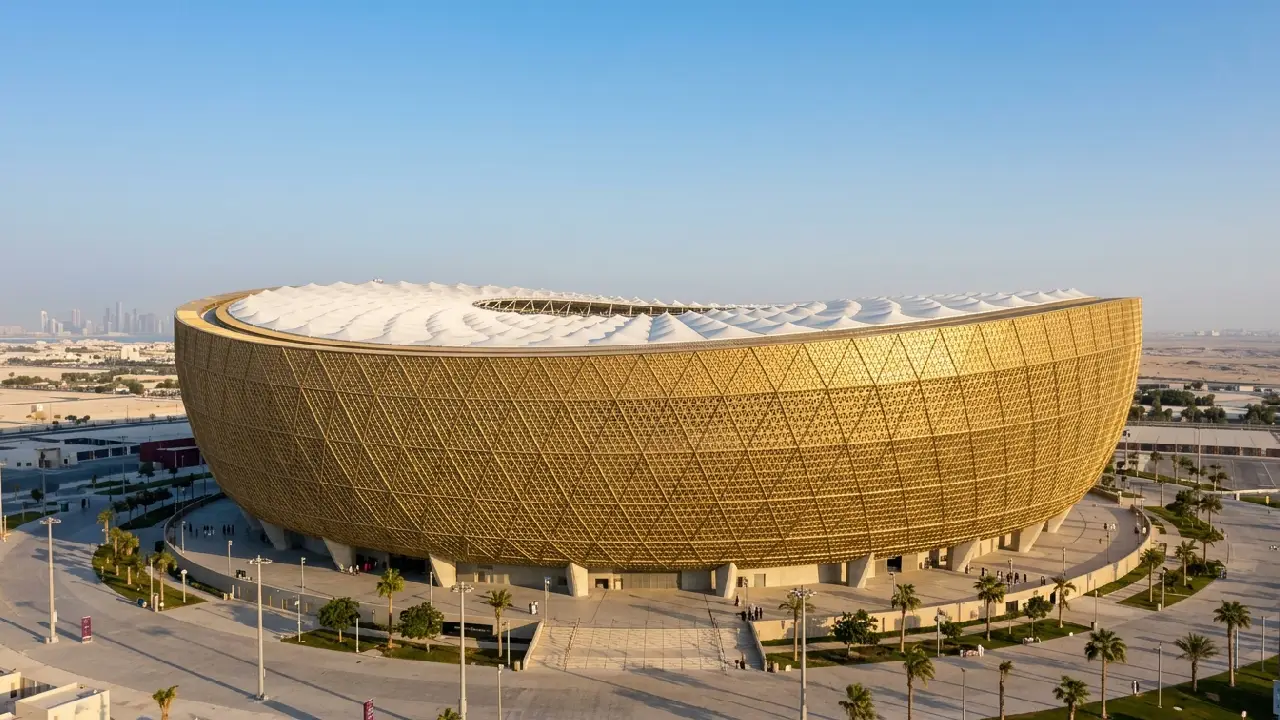
Lusail Stadium, where the 2022 World Cup final was held, sits in Lusail City, a purpose-built urban development north of Doha that’s still expanding today. With a capacity of 80,000, it’s the largest of Qatar’s World Cup venues, and its golden, bowl-like exterior draws inspiration from traditional Arabic vessel and bowl designs, its facade patterned after fanar (traditional lanterns) motifs found throughout the Gulf region. Guided tours run regularly and take visitors through the changing rooms, pitch-side areas, and VIP boxes, alongside exhibits about the stadium’s construction and the tournament itself.
Al Bayt Stadium: A Tent in the Desert
Al Bayt Stadium, in the city of Al Khor about 35 kilometers north of Doha, was designed to resemble a bayt al sha’ar — the traditional tent used historically by nomadic Bedouin communities in the Gulf. Its distinctive tented roof, which can retract, references this heritage directly, making it one of the more visually striking venues from the tournament. The stadium hosted the World Cup’s opening match and several other high-profile games.
Stadium 974: The World’s First Fully Demountable Stadium
Perhaps the most architecturally innovative of Qatar’s World Cup venues was Stadium 974, built entirely from shipping containers and modular steel — a nod to Qatar’s telephone country code (974) and its history as a shipping and trade hub. Designed to be fully dismantled and reused elsewhere after the tournament, it represented one of the most sustainability-focused approaches to major stadium construction in recent sporting history. Following the World Cup, the stadium’s components have been progressively disassembled, so check current status before planning a visit, as it may no longer be standing at its original site by the time you travel.
Aspire Zone and the Sports Legacy
Beyond the World Cup venues themselves, Doha’s Aspire Zone is worth a visit for anyone interested in Qatar’s broader sporting ambitions. The complex includes the Aspire Academy (a elite athletic training academy), Khalifa International Stadium (one of the older, renovated World Cup venues, originally built in 1976), and the Aspire Park, a large public green space popular with local families and joggers in the cooler evening hours.
Visiting Practicalities
Not all stadiums offer daily public tours, and schedules can change based on ongoing events or maintenance, so check current tour availability before planning your visit around a specific venue. The Doha Metro connects to several stadium areas, though some, like Al Bayt in Al Khor, require a taxi or organized tour for the full round trip. For soccer fans in particular, combining a stadium tour with a visit to the Qatar Olympic and Sports Museum (housed in a restored historic building in Doha) rounds out a deeper look at the country’s rapid rise as a global sporting destination, encompassing not just the 2022 World Cup but also Formula 1’s Losail circuit and various other international sporting events Qatar has hosted or plans to host.