
Kuala Lumpur rarely gets the same attention as Bangkok or Singapore among Southeast Asian capitals, but Malaysia’s largest city packs an outsized mix of colonial history, multicultural food traditions, and genuinely striking modern architecture into a compact, easy-to-navigate downtown core.
Day One: The Petronas Towers and Downtown Core
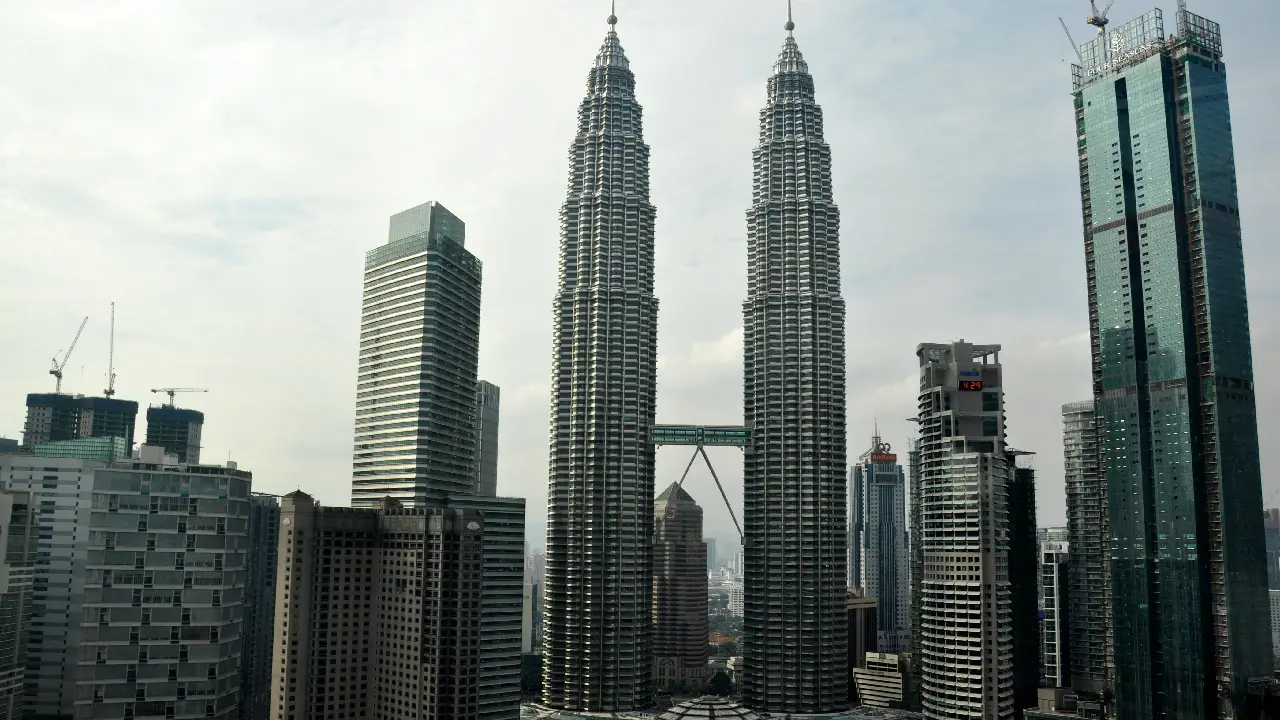
The Petronas Twin Towers, once the tallest buildings in the world (from 1998 to 2004) and still the tallest twin towers globally, remain Kuala Lumpur’s defining landmark. The Skybridge, connecting the two towers at the 41st and 42nd floors, and the observation deck near the top offer sweeping views across the city — tickets sell out well in advance, especially for sunset slots, so book online days ahead if possible.
At the base of the towers, KLCC Park offers a genuinely pleasant green space with a lake and fountain show that runs several times each evening, drawing both tourists and local families out for an evening walk. Nearby, the Suria KLCC mall is one of the city’s most upscale shopping centers, worth a browse even if just for air conditioning relief from the city’s consistent heat and humidity.
Day Two: Colonial History and Chinatown
Merdeka Square, in the historic city center, marks the site where Malaysia declared independence from British colonial rule in 1957, and the surrounding Tudor-revival and Moorish-influenced colonial buildings — including the Sultan Abdul Samad Building, with its distinctive copper domes — make for one of the city’s most architecturally striking areas.
A short walk leads to Kuala Lumpur’s Chinatown, centered on Petaling Street, a bustling market street known for street food, knockoff goods, and a genuinely chaotic, energetic atmosphere that contrasts sharply with the polished towers a few kilometers away. Nearby, the Sri Mahamariamman Temple, the oldest and most important Hindu temple in Malaysia, showcases an ornately decorated tower (gopuram) covered in colorful sculptures of Hindu deities — a visible reminder of Malaysia’s significant Indian community and its long history of religious diversity.
Day Three: Batu Caves and Beyond
Just north of the city, Batu Caves is one of the most significant Hindu shrines outside India, housed in a limestone cave complex accessed via a steep staircase of 272 brightly painted steps (repainted in vivid rainbow colors in 2018, making it one of the most photographed sites in Malaysia). The main cave houses several Hindu temples dedicated to Lord Murugan, whose 140-foot golden statue stands guard at the base of the stairs — the tallest statue of a Hindu deity in the world outside India.
Back in the city, close out your trip in Bukit Bintang, Kuala Lumpur’s main entertainment and shopping district, known for its street food alley (Jalan Alor), which transforms into an open-air night market each evening serving everything from grilled satay to char kway teow, one of Malaysia’s most beloved noodle dishes.
Practical Notes
Kuala Lumpur’s public transport system, combining LRT, MRT, and monorail lines, is efficient and covers most major attractions, making a car largely unnecessary for a city visit. The climate is hot and humid year-round, with a rainy season roughly October through March, though rain typically comes as brief, heavy afternoon downpours rather than all-day washouts. Food here is remarkably affordable — a full meal at a hawker stall typically costs the equivalent of $2-4.