
Paris is one of the most visited cities on earth, which means it’s also one of the most over-planned, over-photographed, and — for first-timers — over-hyped. Strip away the expectations and Paris is still remarkable, but knowing where to focus your limited time makes all the difference.
The Eiffel Tower, Without the Wasted Hours
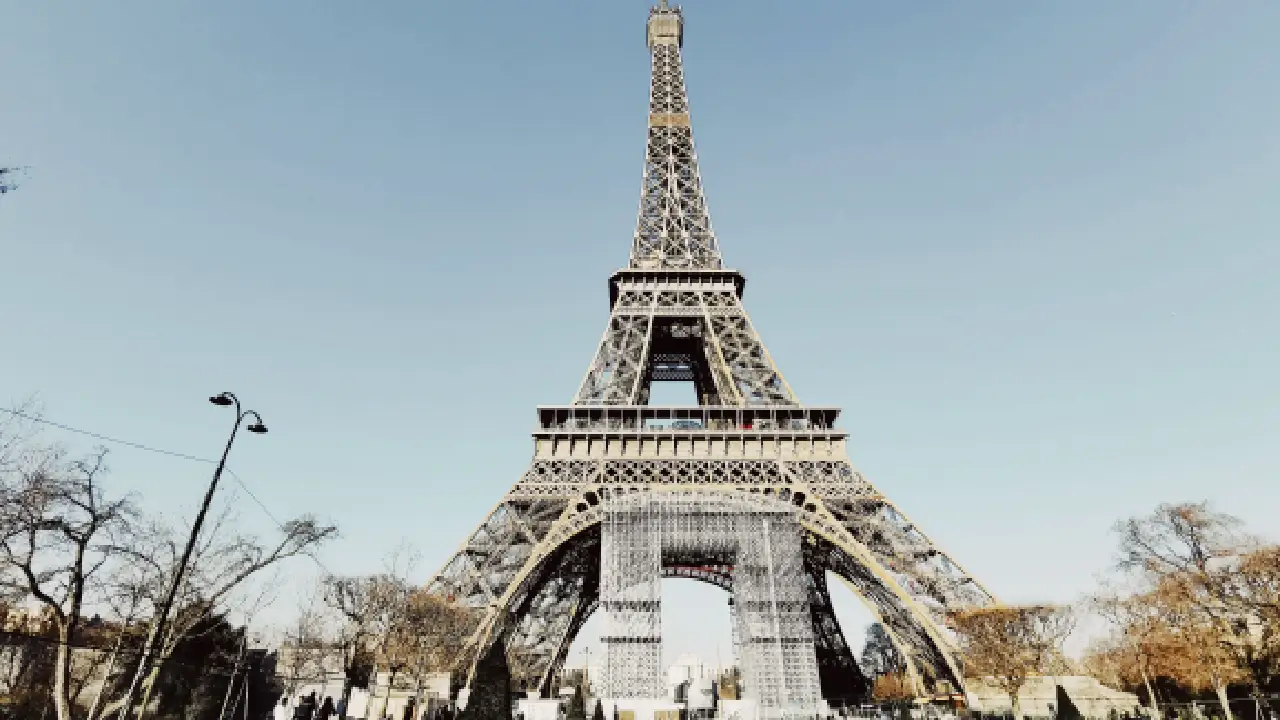
Nearly every visitor wants a photo with the Eiffel Tower, but going up it isn’t essential — the views from the top are impressive but not dramatically different from other, less crowded vantage points in the city, and lines without a pre-booked ticket can run two to three hours. If you do want to go up, book timed-entry tickets online weeks in advance.
For the best photo of the tower itself, skip the immediate base (crowded and chaotic) and walk across the Seine to Trocadéro, where the terrace offers a classic wide-angle view with the tower rising above the Jardins du Trocadéro. Early morning or just after sunset — when the tower’s hourly light show sparkles for five minutes — are the best times to visit.
The Louvre, Strategically
The Louvre is the largest art museum in the world, with roughly 35,000 works on display across three wings. Trying to see it all in one visit is a mistake that exhausts most first-time visitors within two hours. Instead, pick a focused route: the Mona Lisa and the Denon wing’s Italian paintings, the Venus de Milo and ancient Greek sculpture, and the French crown jewels, will give you a satisfying two-to-three-hour visit without the museum fatigue that swallows whole days.
Book a timed-entry ticket online in advance — walk-up lines can exceed an hour, especially in summer — and consider entering through the Carrousel du Louvre underground mall entrance, which typically has shorter waits than the main Pyramid entrance.
Notre-Dame and the Latin Quarter
Notre-Dame Cathedral, badly damaged by fire in 2019, reopened to the public in December 2024 following an extensive restoration, and its interior is now, by most accounts, brighter and more striking than it was before the fire. Even if you don’t go inside, the cathedral’s exterior and the surrounding Île de la Cité are essential Paris.
Cross to the Left Bank into the Latin Quarter, Paris’s historic student district, home to the Sorbonne and a dense concentration of bookshops, cafes, and jazz clubs. Shakespeare and Company, an English-language bookshop with a history stretching back to the 1920s expatriate literary scene, is worth a browse even if you don’t buy anything.
Montmartre: Paris’s Village on a Hill
Montmartre, the hilltop neighborhood in the city’s north, retains a village-like feel that’s increasingly rare in central Paris. The Sacré-Cœur Basilica at its summit offers one of the best free panoramic views in the city, and the surrounding streets — cobblestoned, steep, dotted with small vineyards and artist squares — feel worlds away from the grand boulevards below. Place du Tertre, where street artists have set up easels since the late 1800s, is touristy but still charming if you manage expectations.
Eating Well Without Overspending
Paris has a reputation for expensive dining, but the city’s boulangeries and markets make it easy to eat well cheaply. A proper baguette sandwich from a good boulangerie costs €5-7 and rivals many sit-down meals. For a sit-down experience without the tourist markup, look for a neighborhood bistro away from major landmarks — a simple rule of thumb is that any restaurant within 200 meters of the Eiffel Tower or Notre-Dame is likely overpriced and underwhelming.
Practical Notes
The Paris Métro is extensive and easy to navigate; a Navigo Easy card, reloadable with individual tickets or day passes, is the most convenient option for visitors. Walking, however, remains the best way to actually experience the city — central Paris is compact enough that many “must-see” sites are within a 20-30 minute walk of each other.