
Beyond its headline mosques, museums, and theme parks, Abu Dhabi’s everyday rhythms — a long waterfront promenade, traditional markets, and mangrove-lined waterways — offer a quieter, more local perspective on a city still often reduced to its biggest attractions.
The Corniche: Abu Dhabi’s Front Yard
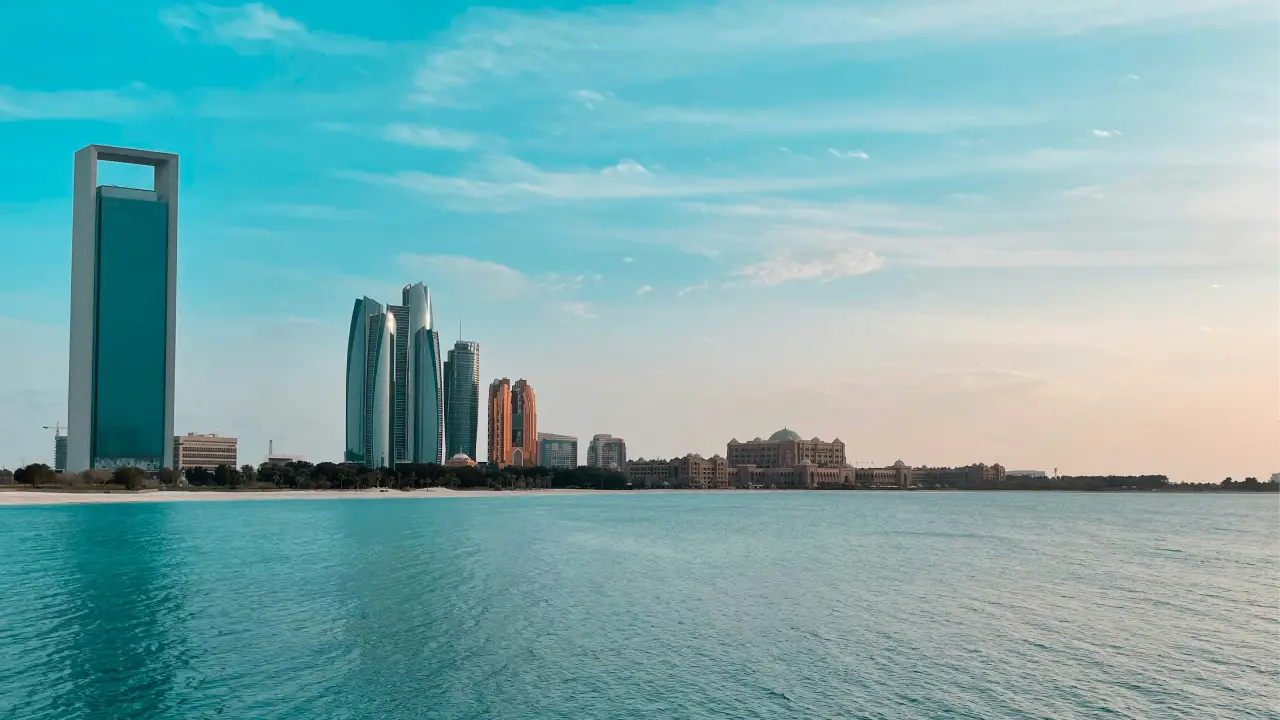
The Corniche, an 8-kilometer waterfront promenade curving along the city’s northern edge, is where Abu Dhabi residents actually spend their leisure time — joggers and cyclists using the dedicated paths in the cooler morning and evening hours, families picnicking on the manicured lawns, and public beach sections offering clean, well-maintained sand and calm, shallow water suitable for swimming. Walking or cycling its full length offers a good sense of the city’s scale and its deliberately spacious, green urban planning, a notable contrast to the density of many other major cities in the region.
At the Corniche’s western end, Emirates Palace (technically now branded Mandarin Oriental Emirates Palace following a 2020 rebrand, though most locals still use the original name) remains one of the most opulent hotels in the world, its gold-domed architecture and marble interiors open to non-guests for afternoon tea or a walk through its public areas — a relatively affordable way to experience the hotel’s extravagance without booking a room.
Traditional Markets and Heritage Sites
The Qaryat Al Beri and Al Ain areas aside, the Heritage Village, near the Breakwater along the Corniche, offers a reconstructed look at pre-oil Emirati life, including traditional Bedouin tents, a mosque, and craft demonstrations — a useful, if somewhat staged, counterpoint to the ultra-modern skyline visible just across the water. For a more genuine market experience, the Iranian Souq (Mina Zayed) sells everything from carpets and ceramics to fresh produce and spices, reflecting Abu Dhabi’s historic trading ties across the Gulf.
The nearby Fish Market, part of the same Mina Zayed waterfront district, offers an early-morning glimpse into the city’s fishing trade, with the day’s catch auctioned off in a lively, fast-paced process — arrive before 7am for the most active atmosphere, and note that several adjacent seafood restaurants will grill your purchase on the spot if you buy directly from the market.
Mangroves and Nature
Abu Dhabi’s coastline includes some of the most significant mangrove forests in the UAE, and the Eastern Mangroves area offers kayak tours through the mangrove channels, a peaceful, low-key activity that reveals a genuinely different, greener side of a city otherwise associated with desert and glass towers. Guided kayak tours typically run in the early morning or late afternoon to avoid the harshest midday heat, and the mangroves support a surprising amount of birdlife, including flamingos that gather seasonally at nearby wetland reserves.
Al Ain: Abu Dhabi Emirate’s Garden City
About 90 minutes inland from Abu Dhabi city, Al Ain — sometimes called the “Garden City” for its comparatively lush, oasis-fed landscape — offers a worthwhile day trip. Al Ain Oasis, a UNESCO World Heritage Site, preserves a traditional falaj irrigation system dating back thousands of years, still actively watering date palm groves that visitors can walk through on shaded paths. Nearby, Jebel Hafeet, the second-highest peak in the UAE, offers a dramatic mountain road drive to a summit viewpoint overlooking the surrounding desert and, on clear days, into neighboring Oman.
Practical Notes
Abu Dhabi is generally quieter and less overtly commercialized than Dubai, which makes it a good fit for travelers prioritizing culture and a more relaxed pace over shopping and nightlife. Taxis are metered, affordable, and plentiful, making them the easiest way to string together Corniche, market, and mangrove stops across a single day without needing to rent a car.